Five findings from new Roffey Park research on why leadership learning sticks when it moves outdoors.
“That’s when it clicked.”
It’s the phrase every facilitator wants to hear. It rarely refers to slide 14. More often it points to a moment: a conversation on a walk, a decision made under pressure, or a task that didn’t go to plan.
That tells us something important. Organisations put significant time and money into leadership and organisational development (L&OD). Yet the setting where that work happens is often an afterthought: a windowless room, spare chairs stacked at the back, and an agenda squeezed between back-to-back meetings.
If we want people to think differently, we have to give them the conditions to do it.
That’s the starting point for Taking Leadership and Organisational Development Outside, the latest paper in our MSc Series. Its author, Simon Coker, is a Senior Consultant and Programme Director at Roffey Park. His research, completed through our MSc in People and Organisational Development, interviewed people who had taken part in outdoor L&OD programmes and asked what actually changed for them, and why.
Here are five findings we think everyone who designs development should sit with.
1. Change the setting, and you change the conversation
Being outdoors made people feel physically and mentally better. More significantly, it changed the social environment. Without the usual workplace norms, status cues and dress codes, hierarchies loosened. Sometimes they flipped entirely: the person most at home on a hillside wasn’t always the most senior person in the office.
Participants told us they felt more relaxed, and more able to contribute openly and fully than they would in a meeting room.
“Being outdoors provides an environment that doesn’t have those sets of behaviours and circumstances that people would expect if you’re going to be sitting in a meeting room.”
2. Side by side beats across the table
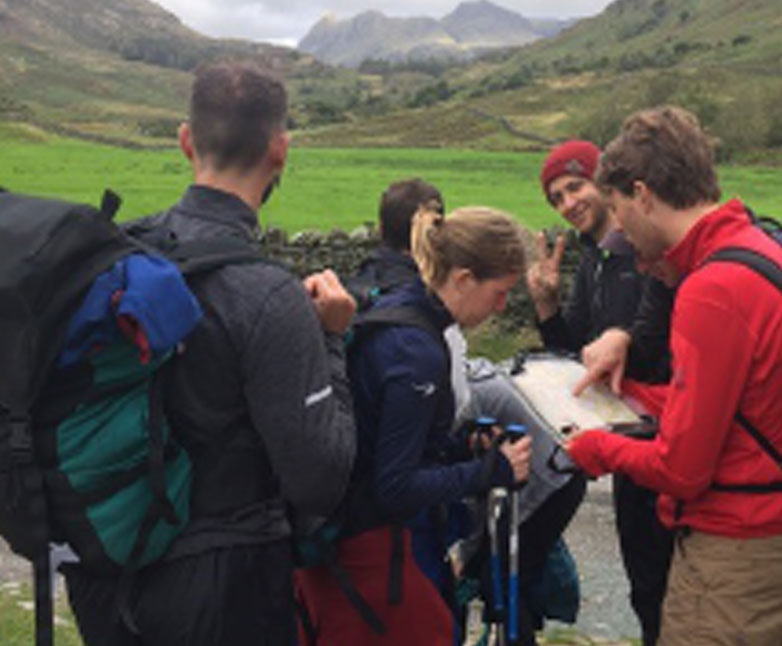
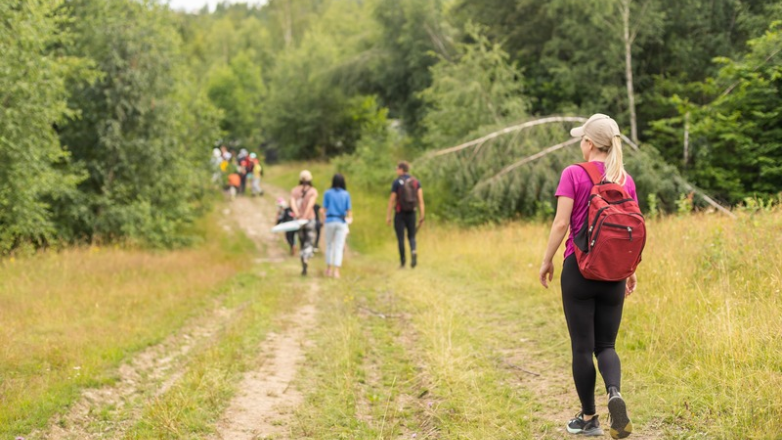
The shape of a conversation matters. Outdoors, people talk while walking side by side, paddling one behind the other, sitting in a circle, or working on a shared task. Groups split naturally and come back together at gates and path junctions, which mixes people up without anyone forcing it.
The result was dialogue that flowed more easily, and with it, deeper trust.
“It’s not like that silence of a table where everyone is looking at each other waiting to speak.”
3. When it feels real, people show up as themselves
The research found two kinds of authenticity. First, the challenges felt genuine. A canoe rescue in open water or a multi-day trek becomes people’s reality for a while, and they are fully immersed in it. Second, people saw each other differently. Challenge strips away some of the everyday pretences, and colleagues meet as their more authentic selves.
That matters, because honest conversation depends on people bringing more of who they are.
4. Confidence built outdoors carries back to work
People developed confidence, self-belief, leadership and communication skills, and a sharper read of group dynamics. Crucially, they took it with them.
“I feel different in a senior leadership meeting. More resilient when people are criticising what I am saying, because I do feel that right to be there.”
Outdoor experience offers something the workplace rarely can: a place where it is safe to fail. There, people can experiment with how they lead and work together, and see what happens.
5. Memorable experience means accessible learning
Interviewees vividly recalled how they felt during experiences from many years ago. That memorability isn’t a nice extra. It’s the mechanism. When people can remember where they were, what was happening and how they felt, they can draw on that learning when a similar situation arises at work.
“…but this canoe thing, I will remember all my life for sure.”
Why this matters for how we design development
Much of what leaders do runs on tacit knowledge: know-how rather than know-about. It is notoriously hard to shift. It’s why people so often manage the way they were managed, especially under pressure, even when they know a better way exists.
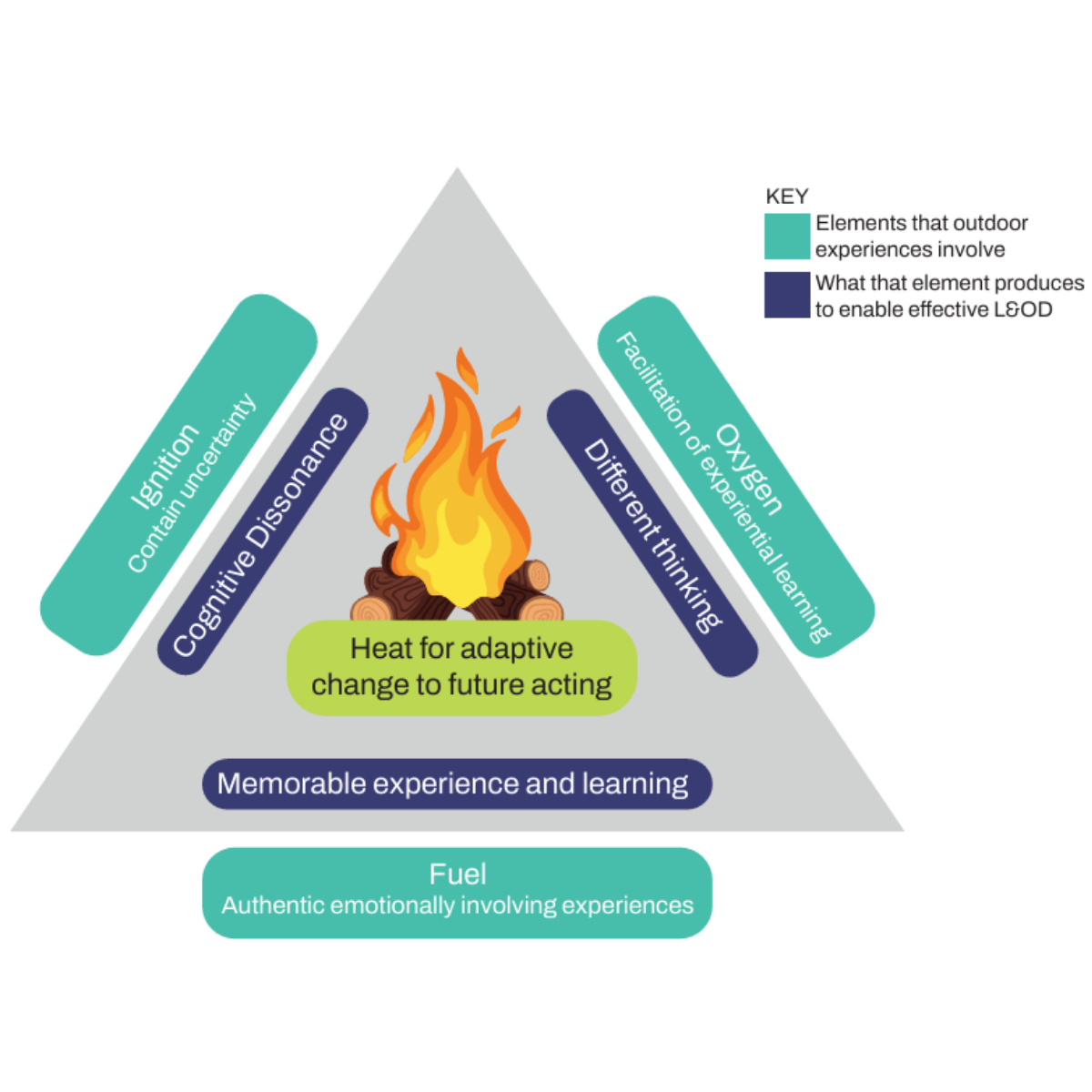
Simon’s research suggests outdoor experiences can help close that gap, but only when they are designed with intent. He captures this in the Campfire Triangle:
- Fuel: authentic, emotionally involving experiences that make learning memorable
- Ignition: uncertainty that creates the dissonance needed for different thinking
- Oxygen: skilled facilitation that turns experience into lasting change
Take one element away and the fire goes out. An outdoor day without purposeful design and facilitation is just a nice day out.
This isn’t an argument that everything should move outdoors. It’s an invitation to ask a better question at the start of any development work:
What conditions do we need to create for people?
We can’t demand honesty, trust or creativity. We can only create the conditions for them to emerge, and the place we choose is one of the most powerful levers we have.
Putting the research into practice
These findings have shaped our new Senior Leadership Retreat in the Scottish Highlands, a format we call a leadership walkshop.
Senior leaders spend most of their time helping everyone else think. They rarely get the space, or the challenge, to do it for themselves. The walkshop brings together a small, carefully curated group of senior leaders for three days in the Highlands. There are no slides, no classroom and no fixed curriculum. Instead, there’s walking side by side, distance from the inbox, and peers who test your thinking rather than just listen to it.
The landscape isn’t the point. It’s the mechanism.
The first cohort is planned for April 2027, and places are limited by design. Find out more about the Senior Leadership Retreat.
Read the full paper
The full paper explores each theme in more depth, alongside the Campfire Triangle and practical recommendations for designing L&OD interventions.
Download Taking Leadership and Organisational Development Outside
About the Roffey Park MSc Series
The MSc Series shares abridged versions of our master’s students’ research: practical, rigorous thinking from people doing the work. Find out more about our MSc in People and Organisational Development, MSc Leadership and Management, or explore more Roffey Park research publications.