Three days, one big theme and conversations that didn’t stop when the speakers did
Last week, Roffey Park was buzzing.
From 3rd to 5th November, business leaders and people and change professionals joined us at Roffey Park Venue for Thrive 2026, built around one theme: Courage to Lead: Building the Future-Ready Organisation.
If you were there, thank you for bringing so much energy and honesty into the room.
If you weren’t, here’s a taste of what you missed. Fair warning: you’ll probably want 29–30th September 2027 in the diary by the end of it.

The conversations that kept going
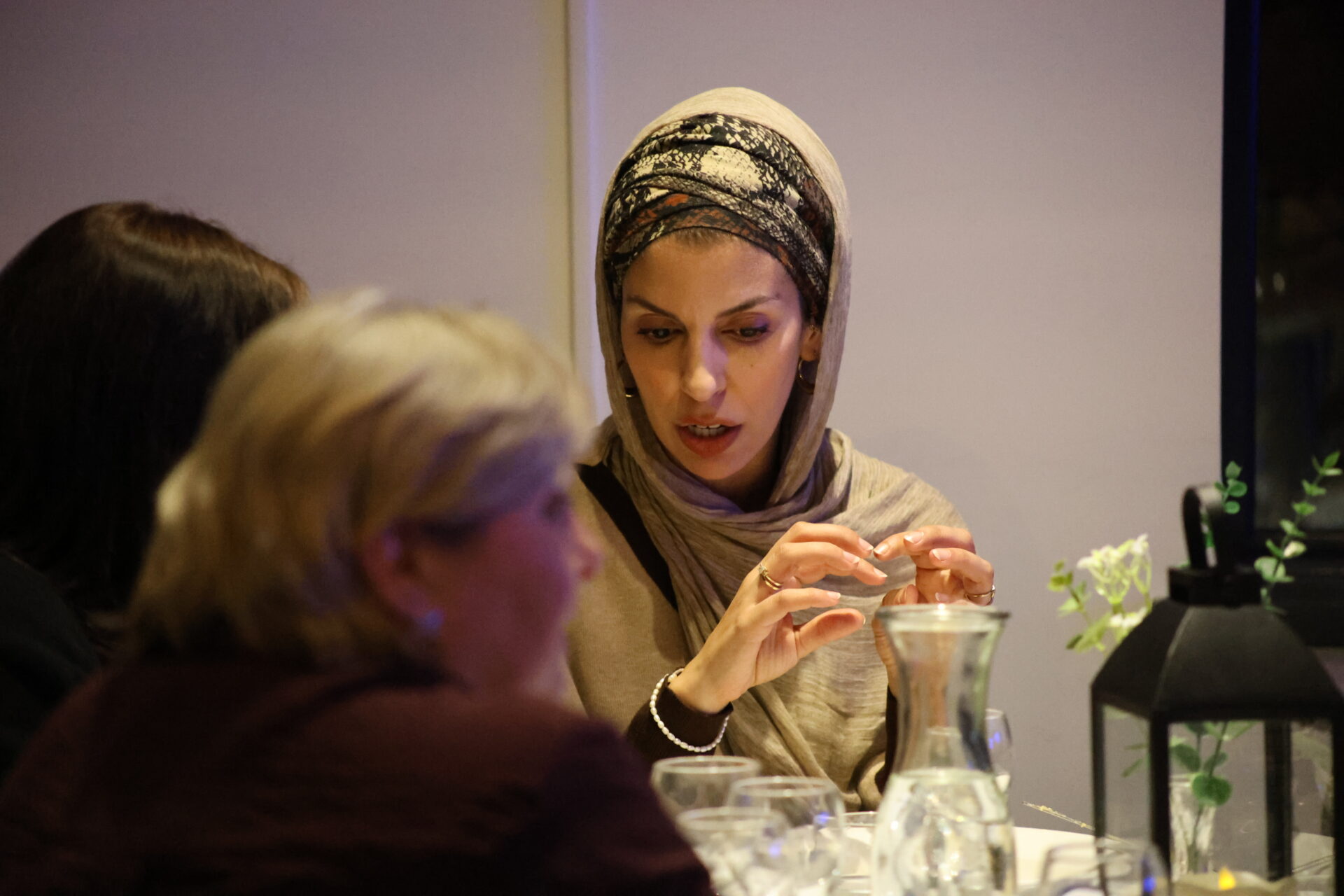
Thrive is small by design and that’s exactly what makes it work. Café-style tables instead of rows. Delegates staying on site. Time built in to actually talk to each other.
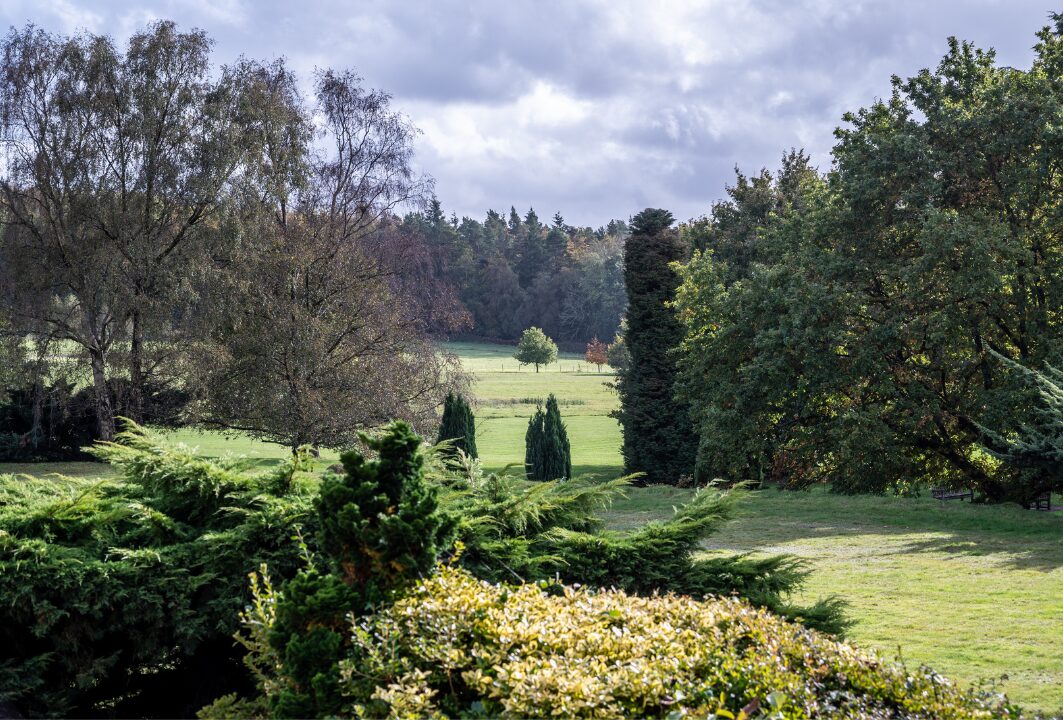
It started on Tuesday afternoon with Emma Du Parcq‘s community-building and mindfulness session. The ideas from the stage carried on over long lunches, around the dinner tables, at the bar late into the evening and on walks through the grounds between sessions. On Wednesday afternoon, A Brilliant Thing CIC‘s “Micro-Mission” had the whole room on its feet, swapping names and asking strangers which human skill mattered most to them. And plenty of people went home with a bag of books from our library, too.
Holding it all together was our fabulous MC, Demola Soremekun, Chartered FCIPD. OD practitioner, independent consultant and master of ceremonies extraordinaire, Demola kept the energy high and the threads connected across all three days, with warmth, wit and a knack for getting even the quietest tables talking. If you missed Thrive, you missed Demola in full flow (and his musical talents).
By Thursday lunchtime, people who’d arrived as strangers were swapping details and making plans to stay in touch. That’s the bit you can’t get from a webinar: the conversation you didn’t know you needed, with someone you didn’t expect to meet, that changes how you see your own work.
Day 1: The courage to lead differently
After lunch and Emma’s session, Kelly Grainger, co-founder of Perfectly Autistic, gave our opening keynote, The Autistic CEO. Kelly asked us to think of one person who felt easy to lead and one who didn’t, then asked the question that echoed through the rest of the conference: are we recognising genuine capability or rewarding people who think and work like us?
A dilemma about two managers up for one promotion got tables debating hard, and one line stuck: what we reward reveals what we really value. Kelly’s reminder that curiosity isn’t the absence of accountability, but how we gather the facts for fair accountability, was still being discussed over dinner.

Day 2: Curiosity, coaching and human-powered leadership
Our CEO Al Bird opened Wednesday by reflecting on eighty years of Roffey Park and the enduring questions that still shape our work, before handing over to Christian van Nieuwerburgh , Professor of Coaching and Positive Psychology at RCSI and the original Coach on a Motorcycle. Christian made the case for curiosity and presence over rushing to an answer, and his phrase “So here we are” became something of a catchphrase for the rest of the day.
Workshops followed: Esther Stevenson on collective resilience and balancing what people and organisations need, and Simon Coker on OD as an essential leadership competency.
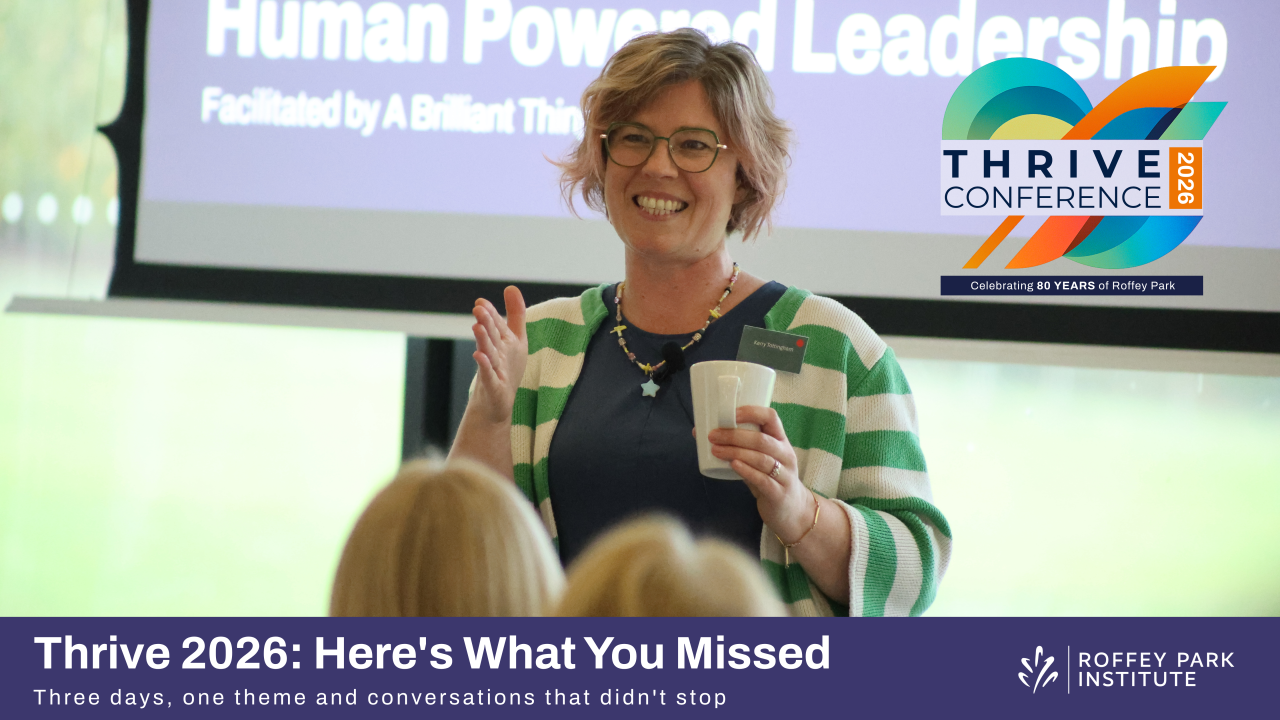
In the afternoon, Kerry Tottingham and Faye Bertram of A Brilliant Thing led two sessions on Human Powered Leadership. Their message: workplaces can compound trauma or help people recover from it, and change is enabled when we mend what is broken and tend to our strengths. Then came drinks, dinner and a lot more talking.

Day 3: From change done to people, to change built with people
Thursday opened with three more workshops: Ben Baginsky on AI, Leadership and Takeaway Pizza, Steve Tarpey on developing use of self in OD practice, and Dr Curie Scott (PhD, MBBS) on making complexity visible. Our Head of Sales Alexandra Norbury then chaired a fireside chat with Byron Johnson Brown 🇬🇧 of BJBLive and Jig Ramji, HR Director at inD and Roffey Park Trustee.
We closed with Anissa Oukhiar 🍉, Associate Director and organisation design practitioner, and her keynote On the Mark. Anissa called out three traps that look like change leadership but aren’t:
- The communication trap: “If people understand it, they’ll own it.” Understanding can produce informed compliance, not ownership.
- The consultation trap: “We asked, so people were involved.” Input without influence can deepen cynicism.
- The consensus trap: “Involvement means everyone must agree.” Participation needs clear decision-making.
Then came a moment everyone will remember: ten teams, sugar cubes, blindfolded builders working one-handed, and leaders who could only guide with words. Same objective for every team. Different resources, information and support. Very different towers. The point landed instantly: results reflect the system around a team, not just the capability inside it.

The question we brought home
Anissa’s towers summed up a thread that ran through all three days: the enormous weight we place on leaders, especially middle managers, and how much depends on the conditions around them.
We can develop someone to challenge constructively, but does the organisation welcome challenge? We can teach someone to empower their team, but do the systems give them real autonomy? Which left us with the question we’re still turning over:
Are we spending too much energy developing people to cope with organisations we haven’t designed well enough?
Launched at Thrive: Roffey Park at 80
That question isn’t new to us. In fact, it’s where we started.
Thrive was also the launch of our new research paper, Roffey Park at 80, marking our 80th anniversary. When the Roffey Park Rehabilitation Centre opened in 1946, it found that helping someone recover only went so far if the job they returned to stayed the same. Eighty years on, with AI, hybrid working and economic strain reshaping work, that insight feels more relevant than ever.
Drawing on our archive and interviews with people who have worked at and with Roffey Park over four decades, the paper explores how to help people meet the demands of work when those demands never stop changing, with practical lessons for practitioners today. Inside, you’ll find everything from 1947 courses teaching “mental first aid” to managers and union officials, to a 1995 programme that took senior managers sailing to learn about constant change, to a 2025 finding on AI in HR that echoes a paper from 1950.
During the conference, Alex sat down with the paper’s author, Dr. James Owens, to talk about what he found in the archive and why that 1946 idea matters now.
You can watch their conversation alongside the paper, below.

Over to you
Whether you were with us or following along from afar, we’d love to hear from you in the comments:
- Were you at Thrive? What’s the conversation that’s stayed with you? (Bonus points if it happened at the bar.)
- Which of Anissa’s three traps have you seen most often: communication, consultation or consensus?
- Where have you seen a “capability problem” turn out to be a conditions problem?
Save the date: Thrive 2027
Our conference will be back on 29–30th September 2027, with more big ideas, more great company and more of the conversations that only happen when you get people in the same place. Watch this space for details and look out for our Thrive film later this month for a proper look at what you missed.
And one more reason to join us: all conference fee profits go to the Val Hammond Research Fund, supporting applied research into a better world of work.
We’d love to see you there.